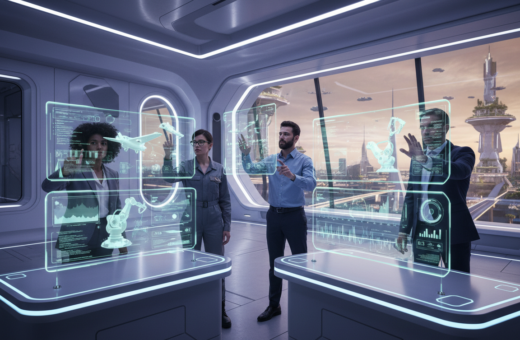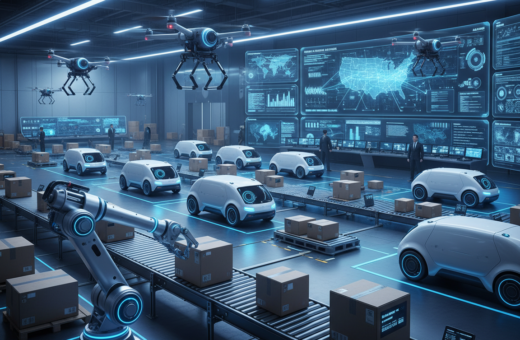
Advanced robotics is no longer confined to fenced-off factory cells doing one repetitive motion all day. In the U.S., the newest wave of automation is defined by smarter sensing, better mobility, safer collaboration with humans, and software that continuously improves performance. The result is a practical push toward measurable efficiency gains across manufacturing, logistics, and field operations—especially where speed, accuracy, and uptime matter most.
Updated: 2026
Why modern robotics is different from “traditional automation”
Classic industrial automation was built for consistency in controlled environments. Next-generation robotics is built for variability. These systems rely on better perception (computer vision, depth sensors), more adaptable movement, and AI-assisted decision-making so robots can handle changing products, layouts, and conditions without constant manual reprogramming.
A big part of this shift is the growth of collaborative robots (cobots) that are designed to operate safely near people, plus autonomous mobile robots (AMRs) that navigate warehouses and production floors dynamically. If you want a solid overview of how this is evolving in real-world deployments, the International Federation of Robotics has frequent industry snapshots and robotics adoption context through its World Robotics materials.
Manufacturing: higher precision, less downtime, more flexible output
U.S. manufacturers are using robotics to improve throughput without sacrificing quality. The biggest wins tend to come from three places: consistency, speed, and fewer production interruptions.
Cobots can take over repetitive fastening, machine tending, and packaging tasks while humans focus on exceptions and higher-value steps. Meanwhile, vision-guided robots are helping with quality checks at a pace that’s hard to match manually, catching defects earlier and reducing rework.
If you want an example of how far industrial motion control and machine vision have come, companies like ABB Robotics show the kinds of applications now common on modern lines.
Logistics and warehousing: automation where minutes really matter
In logistics, robotics shows up as AMRs moving inventory, automated picking assistance, and smarter sorting workflows. The operational payoff usually looks like:
- faster picking cycles
- fewer mis-picks and returns
- better inventory accuracy
- smoother peak-season scaling
AMRs are especially valuable because they can reroute in real time based on congestion or changing priorities—without needing fixed tracks or rigid infrastructure changes. That flexibility is a big reason warehouse automation has accelerated in the U.S. over the last few years.
Beyond factories: robotics spreading into “messier” environments
One of the most important changes is that robotics is leaving perfectly structured spaces and entering environments that are semi-structured or unpredictable: inspection rounds in industrial facilities, basic field servicing, hospital material transport, and even certain construction workflows.
This is where improvements in balance, mobility, and perception make a difference. It’s not about humanoids replacing people; it’s about robots handling specific tasks that are physically demanding, repetitive, or time-sensitive.
A good reference point for what “mobile manipulation” is starting to look like is the work showcased by Boston Dynamics and similar companies pushing practical mobility in industrial settings.
Workforce impact: roles shift toward supervision, maintenance, and orchestration
Robotics changes job design. You typically see fewer roles centered on repetitive motion, and more roles centered on:
- robot cell setup and changeovers
- fleet monitoring (for AMRs)
- maintenance and troubleshooting
- data review and process optimization
- safety, training, and human-robot workflow design
The fastest-moving teams treat robotics as a capability multiplier: they pair automation with training so existing staff can step into higher-skill responsibilities rather than getting stuck with disruption.
What adoption actually requires to deliver real efficiency gains
Robotics delivers the best ROI when it’s treated as a full system, not a gadget. The common building blocks look like:
- clear process selection (high volume, high repetition, high error cost)
- clean integration with WMS/MES/ERP systems
- change management and training
- preventive maintenance planning
- cybersecurity basics for connected automation
Companies that skip integration and training often end up with “robot islands” that don’t scale well.
Challenges to keep in mind
Robotics is powerful, but it’s not plug-and-play in every operation. The most common friction points are:
- upfront cost and deployment time
- integration with older equipment and layouts
- safety review and workflow redesign
- skills gap (maintenance + programming)
- cybersecurity risks in connected environments
The good news is that many of these issues are manageable with phased pilots, clear KPIs, and vendor + in-house ownership from day one.
Where this goes next
The next phase of U.S. robotics growth is less about “more robots” and more about “better coordination.” Expect more fleet-style orchestration (many robots working as one system), more AI-assisted picking and inspection, and tighter coupling with edge computing for faster decisions on the floor and in the warehouse.
Robotics is becoming a standard tool for competitiveness: reducing waste, stabilizing output, improving safety, and scaling operations without the same headcount pressure.
Key Overview
| Area | What improves | Why it matters |
|---|---|---|
| Manufacturing | Precision, throughput, quality control | Less rework, fewer defects, better uptime |
| Warehousing | Picking speed, routing, inventory accuracy | Faster fulfillment and fewer costly errors |
| Human + Robot Workflows | Safety and task specialization | People focus on exceptions and higher value work |
| Operations Management | Monitoring and optimization | Efficiency gains become repeatable and scalable |