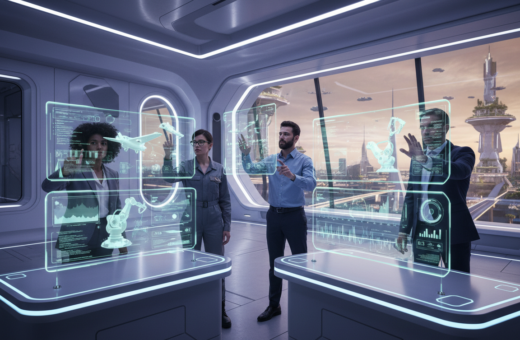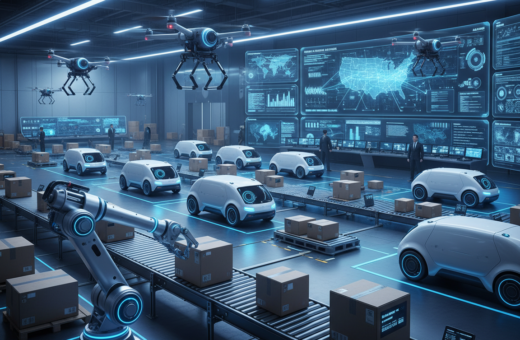
Sustainability is no longer a secondary concern in U.S. manufacturing. It has become a strategic priority that directly influences competitiveness, cost efficiency, and long-term resilience. As environmental pressure, regulatory expectations, and market demand converge, manufacturers are adopting cleaner technologies that reduce emissions while modernizing how products are designed, produced, and delivered.
Rather than slowing industrial growth, sustainable innovation is reshaping manufacturing into a smarter, more efficient system—one where environmental responsibility and economic performance reinforce each other.
Green technologies transforming the factory floor
Manufacturing facilities across the United States are undergoing a structural shift driven by cleaner energy sources, smarter equipment, and optimized production methods. This transition is not limited to a single technology but reflects a broader redesign of how industrial operations consume energy and materials.
Renewable energy adoption plays a central role. Many manufacturers now integrate on-site solar, wind, or hybrid energy systems, reducing dependence on fossil fuels while stabilizing long-term energy costs. Guidance from the U.S. Department of Energy on industrial decarbonization highlights how energy efficiency and clean power together deliver the greatest emissions impact.
At the same time, newer machinery is designed to consume less power, recover waste heat, and operate more precisely—cutting energy use without sacrificing throughput or quality.
Materials and processes built for sustainability
Beyond energy, manufacturing sustainability depends heavily on what products are made from and how they are produced. Advanced materials and redesigned processes are helping manufacturers lower emissions across the full production lifecycle.
Additive manufacturing reduces waste by building components layer by layer, using only the material required. This approach contrasts with traditional subtractive methods that generate excess scrap and require additional energy for reprocessing.
Lightweight composites and recycled materials are also gaining traction, particularly in transportation and industrial equipment. These materials reduce raw material extraction and lower emissions during both production and product use. Circular manufacturing principles—outlined by organizations such as the Ellen MacArthur Foundation—encourage reuse, refurbishment, and material recovery rather than disposal.
Smart factories and digital efficiency
Digital transformation is a major accelerator of sustainable manufacturing. Smart factories use connected sensors, real-time data, and automation to reduce inefficiencies that were previously invisible.
Industrial IoT systems monitor energy consumption, machine performance, and material flow continuously. When paired with analytics and machine learning, these systems identify inefficiencies and optimize operations dynamically. Platforms described by Siemens’ smart manufacturing initiatives show how digital control directly reduces energy waste and unplanned downtime.
Digital twins—virtual replicas of production systems—allow manufacturers to simulate changes before implementing them physically. This minimizes trial-and-error, saving both resources and emissions.
Policy, investment, and collaboration as enablers
Technology alone does not drive sustainable transformation. Policy incentives, financial support, and collaboration across sectors create the conditions for adoption at scale.
Federal and state programs offer tax credits, grants, and low-interest financing for energy efficiency upgrades and clean technology deployment. Programs supported by the Environmental Protection Agency’s Green Power Partnership help manufacturers benchmark and improve performance while meeting regulatory expectations.
Private investment is also increasing, as sustainability aligns with long-term risk reduction and brand value. Manufacturers increasingly collaborate with universities, startups, and research institutions to accelerate innovation and workforce readiness.
Workforce adaptation and equitable transition
As manufacturing becomes cleaner and more digital, workforce skills must evolve. Sustainable manufacturing creates demand for technicians, engineers, and analysts who understand automation, energy systems, and environmental performance.
Retraining programs and partnerships with technical schools help existing workers transition into new roles, ensuring that sustainability does not come at the cost of employment stability. Workforce development is essential to scaling green manufacturing without widening skill gaps.
Measuring impact and ensuring accountability
Accurate measurement is critical to turning sustainability goals into real outcomes. Manufacturers increasingly rely on standardized carbon accounting and lifecycle analysis to track emissions across operations and supply chains.
Frameworks such as those outlined by the Greenhouse Gas Protocol help organizations quantify direct and indirect emissions consistently. Digital monitoring platforms now enable near real-time tracking, allowing manufacturers to adjust operations quickly rather than relying on annual reviews.
This data-driven approach ensures transparency for regulators, investors, and customers while supporting continuous improvement.
Long-term benefits beyond emissions reduction
Sustainable manufacturing delivers advantages that extend far beyond environmental impact. Cleaner operations improve air quality around industrial sites, benefiting public health and community relations. Energy efficiency lowers operating costs and reduces exposure to volatile fuel markets.
Companies that lead in sustainability often strengthen brand trust, attract investment, and gain access to environmentally conscious customers. In many cases, sustainability becomes a competitive differentiator rather than a compliance burden.
Key pillars of sustainable manufacturing transformation
| Area of Innovation | Impact on Manufacturing |
|---|---|
| Clean Energy Integration | Lower emissions and long-term energy stability |
| Advanced Materials | Reduced waste and lighter, more efficient products |
| Smart Factory Systems | Real-time optimization and lower resource use |
| Policy & Investment Support | Faster adoption and scalable impact |
Sustainable technology is not reshaping manufacturing by limiting production—it is redefining how efficiency, resilience, and responsibility work together. U.S. manufacturers that embrace these innovations are building operations that are cleaner, smarter, and better positioned for long-term success in a low-carbon economy.