A growing number of U.S. companies are redesigning how they train employees. Instead of delivering standardized programs to entire departments, nearly half of progressive organizations are now investing in customized learning journeys tailored to individual roles and future skill demands.
This shift reflects a deeper reality: the pace of technological and organizational change has accelerated. Companies that fail to continuously reskill their workforce risk falling behind.
The End of One-Size-Fits-All Training
For decades, corporate learning followed a predictable format — identical training modules, identical timelines, identical expectations. While efficient on paper, this approach often lacked relevance and measurable impact.
Today’s organizations recognize that employees have different experience levels, career ambitions, and learning preferences. Reports discussed by Harvard Business Review highlight how individualized development increases both engagement and knowledge retention compared to traditional corporate training models.
Modern workforce strategies focus on aligning skill development with real-world application. Instead of broad generic content, employees receive targeted training mapped directly to evolving job requirements.
Aligning Employee Growth With Business Strategy
Personalized learning is not simply about offering optional courses. It is about intelligently matching development pathways to organizational objectives.
Companies implementing this model typically:
Identify precise skill gaps through data analytics
Map learning programs to projected future roles
Offer adaptive content that evolves with employee progress
Connect development milestones to career progression
Insights from the World Economic Forum emphasize that rapid automation and AI integration are reshaping global job markets. Organizations must proactively prepare their workforce for roles that may not even fully exist yet.
When learning aligns with strategy, training transforms from an expense into an investment.
How Personalization Improves Retention and Engagement
Employee expectations have changed. Career growth is no longer viewed as optional — it is a primary driver of job satisfaction.
Companies that provide structured, individualized development plans often experience:
Higher engagement rates
Lower employee turnover
Stronger internal mobility
Improved performance metrics
Research from Gallup consistently shows that employees who feel supported in their professional development are significantly more likely to remain with their employer.
Personalized learning paths create clarity. Employees understand not only what they are learning, but why it matters.
The Technology Powering Modern Learning Systems
The rise of adaptive learning would not be possible without advancements in artificial intelligence and workforce analytics.
Leading organizations rely on:
AI-driven recommendation engines
Dynamic content sequencing
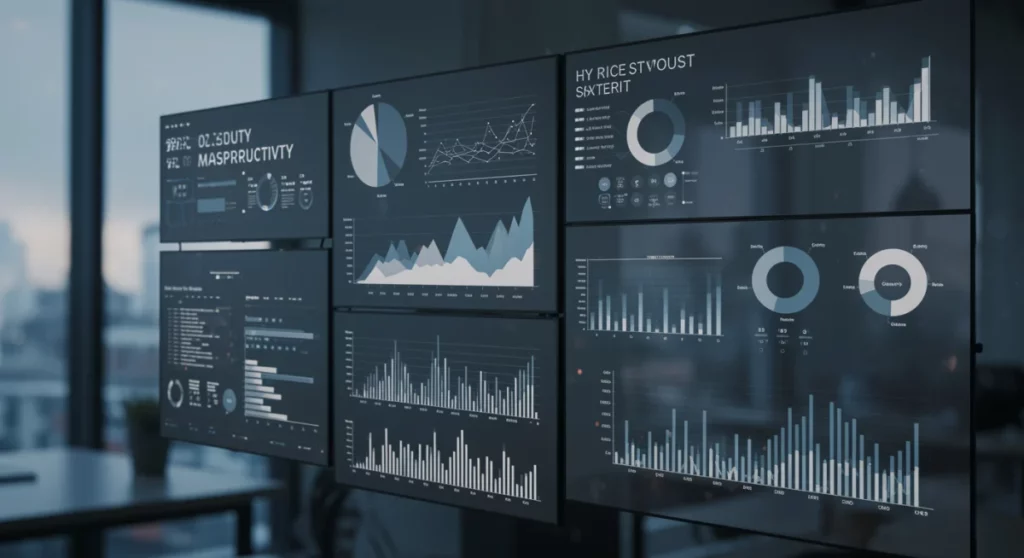
Real-time progress dashboards
Predictive skill forecasting
According to workforce transformation studies from McKinsey & Company, companies that leverage data analytics for talent planning outperform competitors in productivity and innovation.
Learning systems are no longer static libraries of courses. They are evolving ecosystems that adjust in response to employee progress and organizational change.
The Critical Role of Skill Assessments
Effective personalization depends on accurate data. Without skill benchmarking, development efforts become guesswork.
Progressive companies deploy sophisticated assessments that include simulations, competency mapping, and performance analytics. These tools identify precise development needs and generate actionable insights.
Modern systems often incorporate:
Baseline competency evaluations
Ongoing performance tracking
Predictive modeling for future skill demand
Individualized feedback loops
This continuous data cycle ensures that development remains relevant and measurable.
Applications Across Multiple Industries
Personalized workforce development is not limited to technology companies. Its application spans industries.
Healthcare systems tailor compliance and procedural training based on medical specialization. Financial institutions customize regulatory education based on risk profiles. Manufacturing firms deploy immersive training for complex machinery operations.
Insights from global consulting analysis published by Deloitte show that organizations investing in tailored learning models report higher productivity and faster adaptation to industry changes.
The model is scalable because it adapts to context.
Overcoming Implementation Challenges
Transitioning from traditional training to adaptive learning systems requires strategic planning.
Common barriers include:
Integration with legacy systems
Data privacy management
Initial technology investment
Cultural resistance to change
Companies that succeed often begin with pilot programs before scaling organization-wide. Cross-functional collaboration between HR, IT, and leadership is essential.
Transparent communication also plays a key role. Employees must understand that personalized learning is not additional workload — it is a career advantage.
Strategic Advantages of Personalized Development
| Core Element | Strategic Impact |
|---|---|
| Tailored Training | Direct alignment with future roles |
| AI Integration | Faster and more efficient skill acquisition |
| Predictive Analytics | Proactive workforce planning |
| Employee Ownership | Stronger motivation and retention |
Looking Ahead: Building a Future-Ready Workforce
The future of work will demand adaptability. Skill requirements will continue evolving as automation, AI, and digital transformation accelerate.
Organizations investing in personalized learning strategies are not reacting to disruption — they are anticipating it.
By aligning employee development with long-term strategic planning, these companies cultivate resilient teams capable of navigating uncertainty.
In a rapidly changing labor market, the competitive edge no longer belongs to organizations with the largest workforce. It belongs to those with the most adaptable one.
Personalized learning paths are quickly becoming a defining characteristic of forward-looking U.S. enterprises — not as a trend, but as a foundational strategy for sustainable growth.