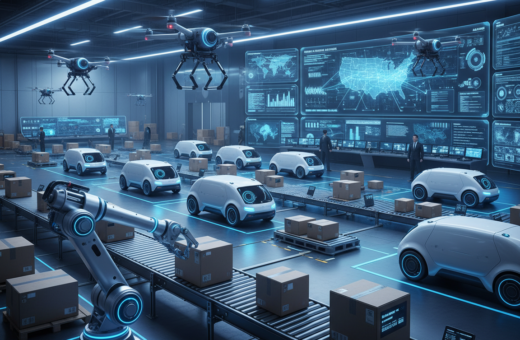
Spatial computing platforms are reshaping how we bring digital content into the physical world. This introduction explains why these systems matter for enterprise, design, and everyday users.
At their core, these solutions blend advanced hardware and software to make virtual objects feel natural in our space. They extend augmented reality and virtual worlds into tools for learning, training, and design.
Users can manipulate digital models as if they were tangible. Hand tracking and spatial mapping enable precise interaction and faster development cycles.
The shift is driven by a need for intuitive interaction models that match how people perceive the environment. Leading hardware vendors and spatial computing software set new standards for performance and interoperability.
In this article, we outline use cases, review key tools, and examine how innovation in content, interaction, and standards will shape digital experiences today and over time.
Defining the Next Interface Layer
The next interface layer replaces flat screens with three-dimensional workspaces that align digital content to real-world geometry. This shift changes how users access information and how designers think about interaction.
The Shift from 2D Screens
Moving beyond monitors lets people place data where it makes sense in a room or on a machine. That change supports faster comprehension and reduces the friction of switching windows.
For enterprise and gaming, this means dashboards, models, and tools live beside the physical objects they reference. Developers can build apps that respect depth, lighting, and surface geometry.
Understanding Extended Reality
Extended reality is the umbrella term for virtual reality, augmented reality, and mixed reality. Together they create immersive experiences that blend digital layers with the physical world.
Hand tracking and eye tracking further reduce input friction and make interaction feel natural. Modern spatial computing software and spatial mapping let applications understand the environment and deliver context-aware content.
- 3D placement improves training and learning outcomes.
- Natural interactions speed development and boost performance.
- Standards and open models will guide wider enterprise adoption.
The Evolution of Spatial Computing Platforms
A 2024 milestone helped unify terminology and focus development on richer, real‑world anchored experiences.
Apple Vision Pro marked a turning point by standardizing the term and pushing manufacturers to prioritize high‑fidelity rendering and low‑latency tracking.
Early efforts were fragmented, with many vendors offering divergent tools and standards.
Today, we see a move toward unified hardware and software approaches. Developers increasingly rely on cross‑device toolchains so apps work across headsets and mobile devices.
The field has progressed from simple augmented reality overlays to complex mixed reality environments that support multi‑user collaboration and enterprise use cases.
“Industry momentum now focuses on lighter, more comfortable gear and consistent developer APIs to speed real adoption.”
- Performance gains keep digital content anchored to the physical world.
- Interoperability and standards reduce fragmentation for design and development teams.
- Healthcare, retail, and training are early areas seeing practical benefits.
For a deeper strategic view on market shifts, see navigating the spatial computing revolution.
To understand workforce trends tied to these advances, read future-proof your career.
Decentralized Worlds and Community Ownership
Decentralized virtual worlds put governance and ownership squarely into the hands of their communities. These environments shift value from corporate control to user stewardship. People buy, build, and sell parcels of virtual land. That changes what ownership means online.
Governance in Virtual Spaces
Decentraland uses a DAO structure so members vote on rules and the roadmap. Token-based voting gives users a direct voice in policy. That makes decision-making transparent and community-driven.
The Sandbox focuses on user-created voxel worlds and an open economy. Brand partnerships with artists and labels boosted adoption and trading of digital items.
- Token voting ties governance to ownership and incentives.
- Blockchain provenance records item history and value.
- Persistence and community control enable ongoing development and social experiments.
These worlds act as labs for new forms of identity, social interaction, and creative economy. Developers and users together shape rules, tools, and content. The result is a participatory cycle of innovation that blends gaming, design, and real‑world value creation.
Enterprise-Focused Collaborative Environments
Companies are replacing flat video calls with shared 3D environments that support design reviews and live walkthroughs.
Spatial offers a web-based approach so teams can join rich meetings without costly VR headsets. This lowers barriers for adoption across global offices.
Enterprises use these tools for design workshops, training, and operational briefings. Mercedes‑Benz, for example, applies Microsoft HoloLens 2 for remote technical assistance to cut travel time and speed service resolution.
Real-time model sharing helps engineering and construction teams spot clashes before they reach the site. That saves money and reduces rework.
| Feature | Benefit | Enterprise Example | Security/Scale |
|---|---|---|---|
| Web access | Lower hardware costs | Remote design reviews | SSO & encryption |
| Mixed reality tools | Faster field fixes | Remote assist (HoloLens) | Access controls |
| 3D model sync | Fewer errors | Construction coordination | Audit logs |
| Training modules | Consistent onboarding | Global simulations | Compliance reporting |
Security and compliance remain top priorities. Enterprises demand role-based controls, encrypted data flows, and clear audit trails before wide deployment.
As these web-first environments improve, they become the default for remote work that aims to match in-person presence and outcomes.
The Role of AI in Modern Virtual Worldbuilding
AI is turning worldbuilding from a specialist trade into a toolset any creator can use. Tools like Stage Meta use Mesh AI to let users generate rich 3D environments without deep coding skills.
By automating routine tasks, these systems speed asset creation and let developers focus on storytelling and interaction. Automated pipelines produce textures, props, and layout suggestions that used to take teams weeks.
Intelligent analytics also improve designs. Machine learning can analyze how users move through a scene and suggest changes that boost engagement and usability.
- Lower barrier: creators without technical backgrounds can build complex spaces.
- Scale: AI helps produce high‑fidelity content for many concurrent users.
- Optimization: layouts and assets adapt based on real behavior and goals.
These advances are reshaping use cases across gaming, virtual reality, and augmented reality. As models mature, expect more dynamic, responsive environments that make digital content more accessible and valuable.
Essential Spatial Computing Toolkits for Developers
Developer toolkits now form the backbone of building believable mixed experiences across devices.
Apple and Google frameworks provide device-level APIs that speed development. ARKit on iOS delivers high-performance tracking and vision features for headsets and phones. ARCore brings similar capabilities to Android, making mobile augmented reality robust across many devices.
Cross-Platform Engines
Unity XR and Unreal Engine XR let teams target multiple headsets and phones with a single codebase. They keep visual fidelity high while offering large ecosystems of plugins and assets.
Industrial Recognition Tools
Vuforia excels at reliable object recognition and integration with CAD for manufacturing and field service. These tools enable precise tracking and reduce errors when overlaying digital content on real machinery.
- Toolkits handle mapping, plane detection, and occlusion so developers can focus on interaction design.
- Choosing the right stack depends on performance needs, target users, and long-term enterprise goals.
- Standardized frameworks cut development time and help maintain scalable, reliable experiences.
Hardware Approaches to Digital-Physical Integration
Headset design now balances transparency, fidelity, and comfort to suit distinct real-world tasks.
Two main hardware approaches define how devices merge virtual layers with the physical world: optical see-through glass and high-resolution screen pass-through.
Optical see-through devices, like Microsoft HoloLens and Magic Leap, overlay holograms through transparent lenses. That method preserves peripheral vision and keeps users aware of their environment. It works well for hands-on workflows where situational awareness matters.
Screen pass-through systems capture the room with cameras and show it on internal displays. Apple Vision Pro and Meta Quest use this approach to deliver high-fidelity immersion and precise lighting for rendered objects. The trade-off is heavier processing and different ergonomics.
Advanced sensors and low-latency camera pipelines are critical to a convincing experience. Eye tracking and hand tracking are becoming standard to enable natural interaction with digital content.
- Choose optical see-through when peripheral awareness and long wear matter.
- Choose pass-through when visual fidelity and full-scene rendering are priorities.
As hardware shrinks and energy efficiency improves, expect lighter, eyewear-like devices that make spatial computing and augmented reality part of daily use.
Transforming Industrial Training and Simulation
Industrial teams gain real practice by rehearsing complex tasks inside realistic virtual scenarios. These programs let workers train without the hazards of live equipment.
Transfr leads the field with virtual reality solutions that scale across large workforces. Their tools create repeatable, measurable learning paths that boost skill retention and reduce on‑the‑job errors.
Studies show simulated training improves performance and memory compared to passive classroom methods. Instant feedback in the session helps trainees correct mistakes and build confidence faster.
- Safe practice for dangerous or costly machinery
- Scenario replay and performance analytics for faster mastery
- Lower downtime and fewer field incidents after training
| Benefit | Why it matters | Example |
|---|---|---|
| Risk-free rehearsal | Prevents accidents during learning | Crane operation simulations |
| Immediate feedback | Shortens skill acquisition time | Assembly line error correction |
| Scalable delivery | Trains many users consistently | Global manufacturing rollouts |
As this technology matures, adoption will grow across manufacturing and construction. For a focused review of industrial adoption trends, see the industrial training report.
Advancements in Healthcare and Surgical Visualization
Modern visualization tools let care teams inspect organs in three dimensions, turning scans into interactive guides for surgery.
Doctors use 3D models to plan complex procedures and explain steps to patients. These views reveal anatomy and variations that flat images can hide.
Surgical simulations let trainees rehearse operations in a risk-free setting. Practice improves confidence, technique, and readiness for real cases.
In the operating room, augmented reality overlays give hands-free access to imaging and vital data. This reduces interruptions and supports faster decisions.
Hospitals invest in this technology to lower complication rates and streamline workflows. The precision also enables new, minimally invasive approaches once considered too difficult.
Remote assistance is emerging as a major benefit. An expert can guide a local surgeon live, combining shared 3D views with voice and annotations to improve outcomes.
- Improved surgical planning with interactive 3D visualization
- Risk-free training through realistic simulation
- Real-time overlays for hands-free intraoperative guidance
Redefining Retail and Consumer E-commerce
E-commerce is moving from static photos to live, room‑aware product previews that match scale and lighting. Retailers like IKEA and Warby Parker let shoppers place items inside their homes, so decisions feel less risky.
This technology reduces returns by giving a truer sense of fit and size. Beauty brands such as Ulta Beauty add virtual try‑ons to help users test looks before buying.
Gaming shows the commercial upside too. Titles like Beat Saber have proven demand for immersive content, generating hundreds of millions in revenue.
- More engaging experiences convert casual browsers into buyers.
- Retailers collect spatial data to learn how people place and interact with items.
- Integrated tools create a smoother path from discovery to checkout.
| Use Case | Benefit | Brand Example |
|---|---|---|
| In‑room visualization | Lower return rates | IKEA, Warby Parker |
| Virtual try‑on | Higher conversion | Ulta Beauty |
| Immersive content | New revenue streams | Beat Saber |
As accessibility improves, more retailers will bridge online and offline shopping. Expect richer discovery, better personalization, and clearer purchase intent for users nationwide.
Challenges Facing Widespread Adoption
Widespread use remains blocked by practical hurdles that touch cost, comfort, and trust.
The high price of hardware and the need for more intuitive interfaces slow adoption, especially in the enterprise. Buyers expect clear ROI before upgrading tools or workflows.
Privacy and data security are major concerns. Devices map rooms and capture personal data, so firms must build strong safeguards and transparent policies to earn user confidence.
Technical limits persist. Battery life, weight, and processing power still limit day‑long wear and true mobility. Developers juggle performance, heat, and user comfort.
The market is fragmented. Lack of shared standards makes asset and identity portability hard across different platforms and vendors. That fragmentation raises development costs and risks for creators.
Accessibility and skills are also hurdles. Teams need specialized expertise, and experiences must work for users with varied abilities.
- Cost & comfort: hardware barriers
- Privacy & security: trust and data controls
- Interoperability: standards and asset portability
- Skills & access: developer gaps and inclusive design
Overcoming these challenges will require coordinated efforts from tech vendors, policymakers, and developers to build a safe, inclusive path forward for spatial computing and mixed reality.
The Path Toward Interoperability and Shared Standards
A shared set of technical rules will determine whether immersive worlds grow into an open web or remain segmented behind vendor walls.
Walled gardens today block easy movement of identities and assets. That limits user choice and raises costs for creators.
Industry leaders now see collaboration as essential. Open efforts such as OpenXR are reducing lock‑in and proving common protocols can work.
Data portability and unified payment systems will be key. When wallets, avatars, and item records travel freely, markets grow and users stay loyal.
“Interoperability demands both technical standards and shared business rules to make mixed reality useful at scale.”
- Standard APIs: enable cross‑device content and consistent behavior.
- Shared identity: lets users carry profiles across worlds.
- Open commerce: supports frictionless transactions and fair revenue models.
Real progress requires compromise and a shared vision. If companies cooperate, the result will be richer experiences and a more open world for everyone.
Conclusion
D. Across industries, immersive tools are moving from pilots to core workflows that show measurable ROI.
These advances in technology change how we interact with the world by blending digital content into physical space. The approach already delivers real value in healthcare, manufacturing, and retail.
Challenges remain: hardware limits, interoperability gaps, and user trust issues. Success will depend on shared standards that protect privacy and improve accessibility.
With continued investment, this computing-driven evolution can unlock higher productivity, deeper creativity, and better collaboration. The road ahead is uncharted, but the potential of this technology to reshape reality is vast and worth pursuing.